
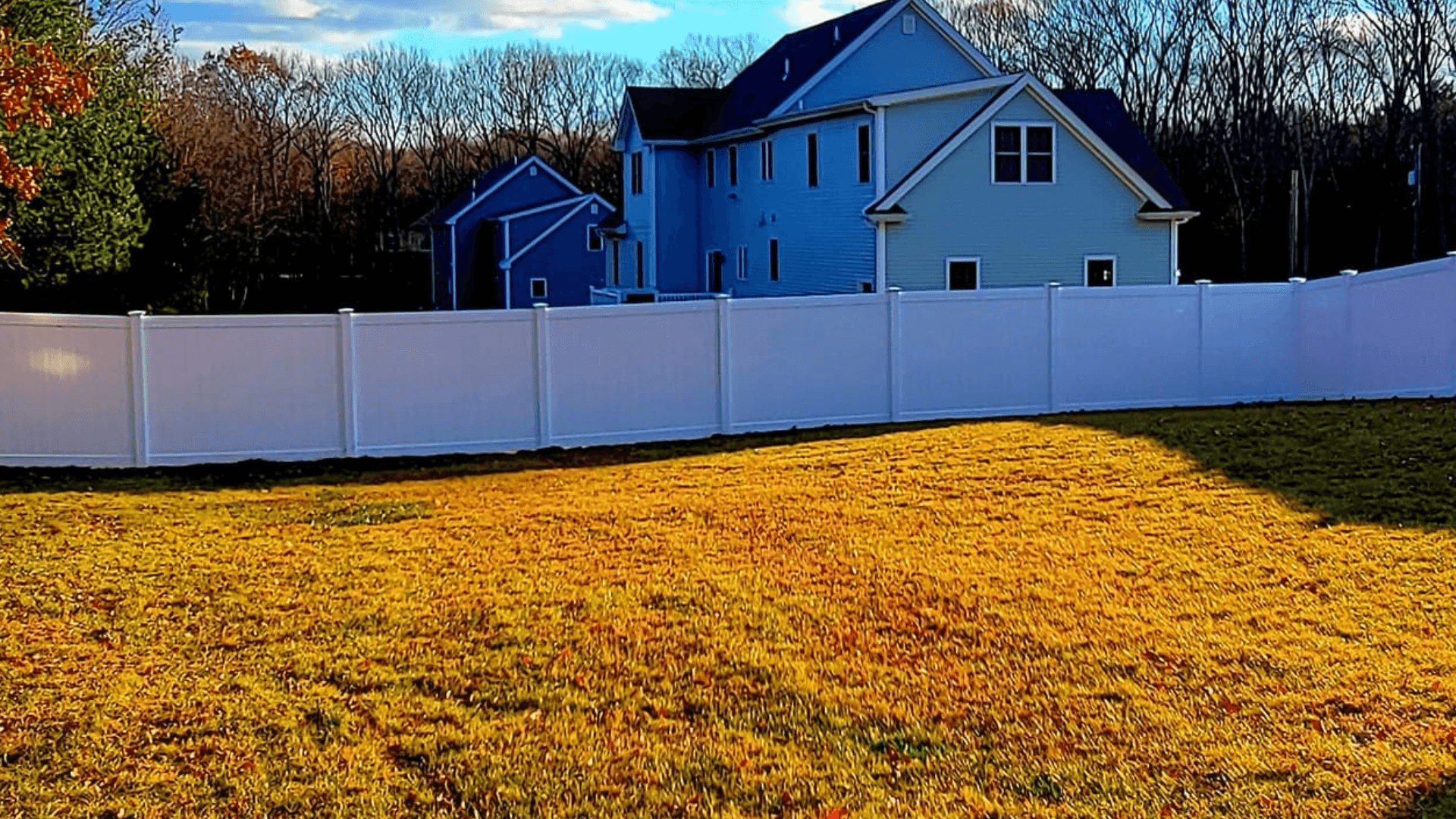

Many properties throughout North Smithfield and the surrounding Rhode Island area have uneven terrain. Some yards have a gradual slope that is barely noticeable, while others have steep grades, retaining walls, rocky areas, or several elevation changes across the property. Each condition can affect how fence panels are positioned, how posts are installed, and how closely the fence follows the ground.
The right installation method depends on the slope, the fence material, and what you need the fence to accomplish. A fence designed primarily for privacy may require a different approach than a fence intended to contain pets or define property boundaries.
Before choosing a fence, homeowners should understand how sloped installations work and what factors can affect the finished result.
Can You Install a Fence on a Sloped Yard?
Yes. Most fence materials can be installed on sloped or uneven land, including:
The installation method may change depending on the material and the grade of the yard. Some fence styles can follow the slope naturally, while others are installed in sections that create a stepped appearance.
The goal is not necessarily to make the fence perfectly level. Instead, the fence should work with the property while maintaining proper post depth, consistent spacing, structural stability, and the level of privacy or containment you need.
A professional fence installer will evaluate the entire fence line before recommending an installation method.
Racked Fencing Follows the Natural Slope
Racking, sometimes called contour installation, allows the fence to follow the grade of the yard.
With this method, the rails angle downward while the pickets remain vertical. The top of the fence creates a line that generally follows the slope rather than remaining level from one section to the next.
Racked installation often creates a more continuous appearance because there are fewer large gaps beneath the fence. This can be especially helpful for homeowners installing a fence for:
- Pet containment
- Backyard privacy
- Pool safety
- Property security
The amount a fence can rack depends on its design and material. Some aluminum and vinyl fence systems are designed to accommodate changes in elevation, but every fence style has limits. A steep grade may require shorter sections, adjustments, or a different installation approach.
Stepped Fencing Creates Level Sections
Stepped installation keeps each fence panel level while positioning each section lower or higher than the one beside it.
The result resembles a series of steps moving along the slope. Because each panel remains level, triangular gaps may appear beneath the lower end of each section.
This method is often used when fence panels cannot rack enough to follow the grade. It may also be appropriate for certain privacy fence designs or properties with sharper elevation changes.
The size of the gaps beneath a stepped fence depends on the steepness of the yard and the length of each section. If the fence needs to contain a small dog or provide complete privacy near ground level, those gaps should be discussed before installation.
In some cases, shorter panels or customized sections can help reduce the open space beneath the fence.
The Slope Can Affect Fence Height
Fence height can look different when viewed from various areas of a sloped property.
For example, a six-foot privacy fence may appear taller from the lower side of the slope and shorter from the higher side. Changes in elevation can also affect how much privacy the fence provides from neighboring homes, roads, decks, or nearby properties.
Before installation, consider where privacy matters most. Standing in different parts of the yard can help you identify important sightlines.
Your installer can explain how the grade may affect the finished height and help determine whether the selected fence style supports your privacy goals.
Gates Require Additional Planning on Uneven Ground
Gates are one of the most important parts of planning fence installation on a sloped yard.
Unlike fence panels, gates need enough clearance to open and close properly. Installing a gate directly across a steep slope can create problems if the bottom of the gate contacts the ground as it swings.
The location of the gate may need to be adjusted to a flatter section of the property. Depending on the layout, the installer may also recommend grading a small area, changing the direction in which the gate opens, or adjusting the gate design.
Homeowners should also consider how the gate will be used. A small walk gate may have different placement requirements than a wider opening used for lawn equipment, trailers, or service access.
Planning gate locations before installation helps avoid clearance and accessibility issues later.
Ground Conditions Matter Beyond the Visible Slope
The angle of the yard is only one factor that affects installation.
Sloped properties may also include:
- Exposed ledge or rocky soil
- Tree roots
- Drainage areas
- Retaining walls
- Erosion
- Soft or frequently wet ground
- Sudden changes in elevation
These conditions can affect post placement and installation requirements. Fence posts need to be properly positioned and secured to support the fence over time.
Drainage is another important consideration. A fence should not unintentionally block the natural flow of water or contribute to erosion. If runoff regularly moves through part of the yard, tell the installation team during the estimate so the condition can be evaluated before work begins.
Why an On-Site Fence Estimate Matters
Sloped yards are difficult to evaluate accurately through photos alone.
An on-site free estimate allows the fence company to walk the proposed fence line, review changes in elevation, identify potential obstacles, discuss gate placement, and determine which installation method may provide the best result.
It also gives homeowners an opportunity to ask specific questions before selecting a fence.
Will the fence follow the slope or use stepped sections? Will there be gaps beneath the panels? How will the grade affect privacy? Where should the gates be placed?
Clear answers during the planning stage help set accurate expectations for the completed installation.
Every sloped property is different. A gradual backyard grade may require only minor adjustments, while a steep or uneven fence line may need a more customized installation plan.
North Smithfield Fence provides full professional fence installation for homeowners throughout North Smithfield and surrounding communities. Our team evaluates your property, explains installation options, and helps you select a fence that suits the layout, grade, and intended use of your yard.
Schedule an estimate with North Smithfield Fence to have your fence line evaluated and receive recommendations based on your yard, goals, and preferred fence style.

