
The fence height you need will depend on the purpose of the fence, your property location, and local regulations.
For privacy, the most common fence height is 6 feet. For keeping pets inside or a basic property definition, a 4 to 5-foot fence might be enough. For security or to keep large dogs in, a 6- to 8-foot fence is often the recommended choice.
Local municipal regulations in Rhode Island and Massachusetts set maximum allowable heights that change from city to city and town to town. Before installing a fence, you can verify these requirements to make sure your fence meets local standards.
Below is a detailed breakdown that can help you determine the correct fence height for your property.
The purpose of Your Fence Will Help You Determine How Tall Should Be
The height you need should be based on the main reason you are installing the fence.
If it’s for Privacy
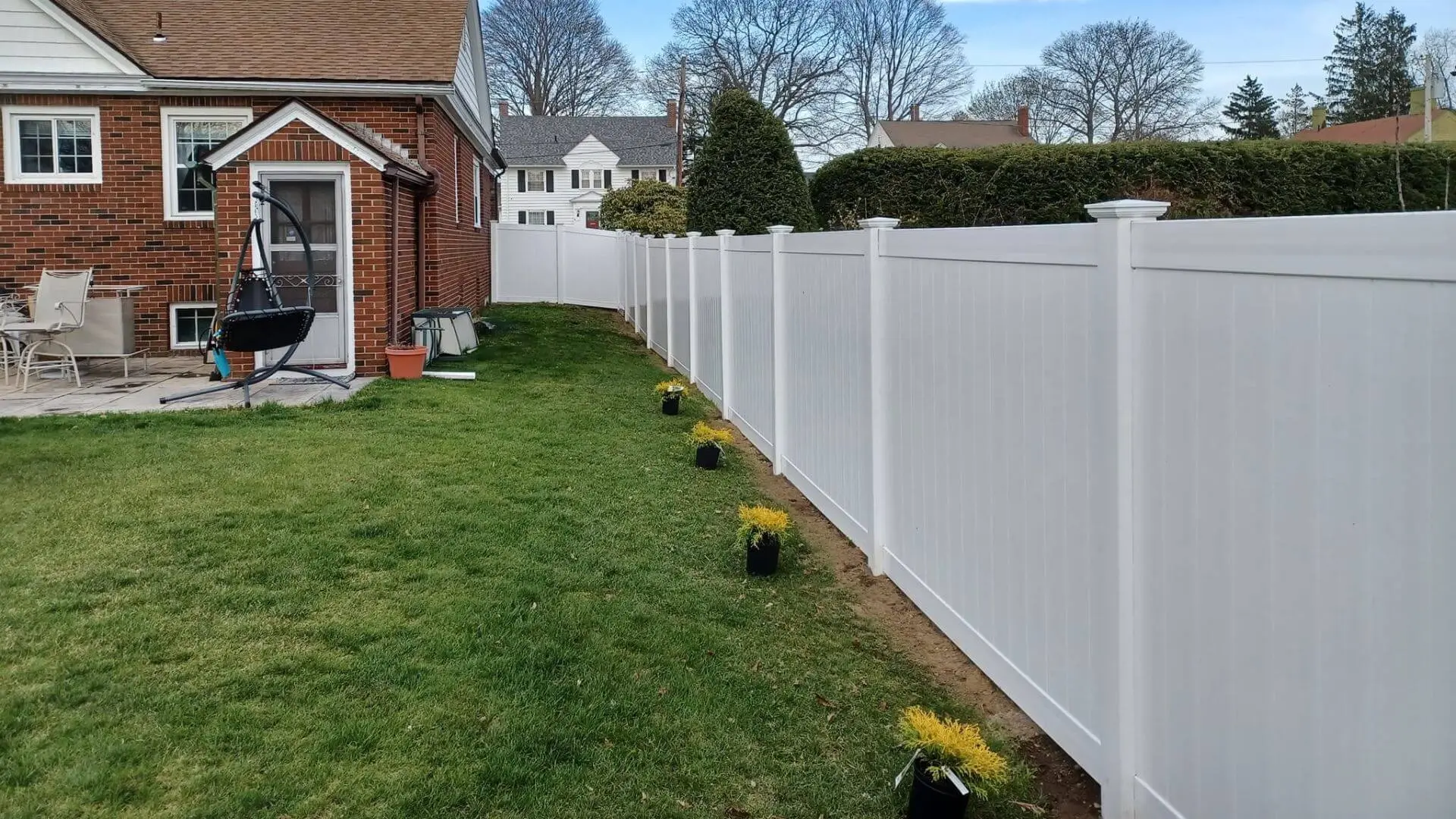
A 6-foot fence provides effective privacy for patios, decks, and backyards. It limits visibility from neighboring properties and streets. In many New England communities, 6 feet is the standard maximum height in back yards without a special permit.
For Security
For security purposes, many homeowners choose a 6 to 8-foot fence. Taller fences are useful for deterring trespassers. Before installing a fence taller than 6 feet, you should always check local regulations. Some areas require a permit or have lower maximums.
For Pet Containment
If your goal is to keep pets safe and inside, the fence height should be determined by the pet’s size and ability to jump. Small dogs may be safely contained by a 4-foot fence. Large dogs often require a 6-foot or higher fence to avoid escape.
For Child Safety
A 4 to 6-foot fence around play areas or pools can improve safety. Choosing the right pool fence often requires meeting specific requirements for height and latch type.
Common Fence Heights and Uses
3 to 4 Feet
- Decorative borders along walkways
- Property edge definition without blocking views
- Containing small pets that are not jumpers
4 to 5 Feet
- Pet containment for medium-sized dogs
- Garden and yard definition
- Best for front yard applications where higher fences are restricted
6 Feet
- Standard for backyard privacy
- Most effective height for blocking sight lines
- Common maximum in many Rhode Island and Massachusetts towns
7 to 8 Feet
- Added security or privacy needs
- Large dogs that can jump 6 feet
- Only allowed with a permit in many jurisdictions
How to Measure for Proper Fence Height
Accurate measurement ensures your project meets local requirements.
- Measure from the ground to the top of the proposed fence.
- Account for variations in ground level.
- Ensure your measurement reflects the highest ground point along the fence line.
- Check with your zoning office if your property is on a slope.
Proper measurement helps you avoid permit issues and potential fines.
Tips for Choosing the Right Fence Height
Know Your Goal
Determine if your priority is privacy, security, pet containment, or aesthetics and that will guide the appropriate height.
Check Requirements First
Usually, your fence company can guide you through these specifics, but you can also proactiveley check what the requirements are or contact your local city or town zoning office to confirm the maximum allowable height and whether a permit is needed.
Consider Your Neighbors
High fences can impact sight lines and neighbor relationships, so keep that in mind. Also, privacy can sometimes be achieved with landscaping combined with a lower fence.
Plan for Gates
Gate height should always match the fence. Make sure latches and closures meet any safety requirements, especially near pools.
If you are planning a new fence and want professional support from measurement to installation, explore our fence installation services or request a free estimate and get the right fence height for your needs.