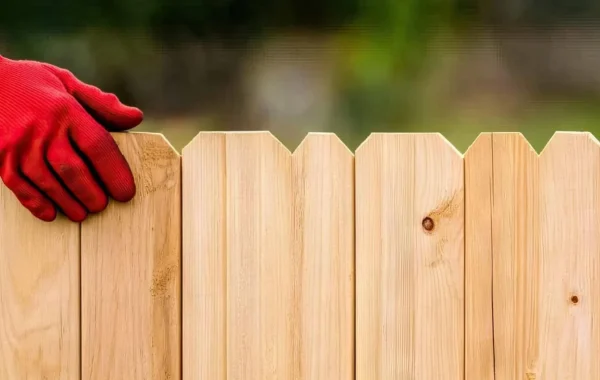


If privacy is one of your main reasons for installing a fence, board-on-board fencing is worth considering. Its overlapping design gives you more coverage than a standard stockade or side-by-side privacy fence, and it continues to offer privacy as the boards naturally expand and contract.
Now, that extra coverage comes with a higher upfront cost, more material, and a few practical considerations. Here is what property owners around should know before deciding if board-on-board fencing is the right choice.
What is board-on-board fencing?
A board-on-board fence is built with vertical boards that overlap slightly. A first layer of boards is installed with small spaces between them, and a second layer covers those spaces. The result is a solid-looking fence with no direct line of sight through the panels.
This is different from a standard cedar or vinyl fence, where boards are installed next to one another. Those fences provide good coverage when they are new, but gaps may become more noticeable as the wood dries and contracts.
Board-on-board fencing is also sometimes confused with shadowbox fencing. A shadowbox fence places alternating boards on opposite sides of the rails, creating an attractive appearance from either direction while allowing some visibility at an angle. Board-on-board construction focuses more heavily on complete privacy.
Board on board fences: Top benefits
Dependable privacy
Wood changes with the weather. Boards absorb moisture, dry out, expand, and contract throughout the year. With a traditional wood privacy fence, that movement can create visible spaces between boards.
The overlapping boards used in board-on-board fencing help prevent those spaces from becoming open sightlines. This makes the style a good option for backyards with pools, patios, outdoor dining areas, or neighboring properties located close together.
It can also work well around commercial properties if screening is needed for equipment, storage areas, dumpsters, or employee spaces. The design offers a cleaner and more finished appearance than many basic utility fences.
It offers a finished look
Board-on-board fencing uses more lumber than a conventional privacy fence, which gives it a heavier and more substantial appearance. It can complement traditional homes, wooded properties, and yards where a natural material fits better than vinyl or aluminum.
The top can be finished in several ways, including a straight line, a framed cap, or a decorative profile. Post caps and trim boards can also be added depending on the look you want.
Because the boards overlap, the fence has more visual depth than a flat row of pickets. That detail can make a noticeable difference when the fence will sit near a patio, garden, driveway, or another highly visible part of the property.
Does board-on-board fencing lasts longer?
The overlapping design does not automatically make a fence stronger. Long-term performance depends on the lumber, posts, fasteners, installation depth, drainage, and exposure to wind.
A board-on-board fence is heavier than a standard wood fence because it requires additional pickets. Its solid surface also catches more wind than an open fence style. Proper post placement and installation are especially important in exposed yards or open commercial properties.
Professional installation helps ensure that the posts, rails, gates, and hardware are designed to support the added weight. It also reduces the chance of premature leaning, sagging gates, or loose sections.
What kind of maintenance does it require?
Like other wood fences, board-on-board fencing needs routine care. Keeping leaves, soil, and mulch away from the bottom of the fence can reduce moisture exposure. Periodic cleaning removes dirt, mildew, and organic buildup.
A stain or protective finish can help preserve the wood’s appearance and slow weathering. How often the fence needs to be refinished will depend on sun exposure, moisture, the product used, and the look you want to maintain.
Individual damaged boards can often be replaced without rebuilding the entire fence. However, the overlapping layout means repairs may involve removing more than one board to reach the affected area.
If minimal maintenance is the priority, ask your fence contractor about vinyl privacy options before making a decision.
How much does board-on-board fencing cost?
Board-on-board fencing generally costs more than a traditional side-by-side wood privacy fence. The installation requires additional boards, more fasteners, and more labor. Gates may also need heavier framing and hardware because of the added material.
Your final price will depend on the fence height, total footage, lumber selection, number of gates, property access, grading, and whether an existing fence must be removed.
For a fence replacement, the condition and location of the old posts can also affect the scope of work. An on-site estimate is the best way to compare the actual cost of board-on-board fencing with other privacy options for your property.
Is it worth it for your backyard?
Board-on-board fencing is often worth the investment when lasting privacy is the main goal. It is particularly useful for properties with nearby neighbors, active outdoor spaces, pools, or areas that need to remain screened throughout the year.
It may not be the best choice if you want the lowest-cost wood fence, prefer an open view, or have a property where airflow is especially important. In those cases, spaced picket, shadowbox, vinyl, aluminum, or chain-link fencing may be a better fit.
The right decision comes down to how you use the property, how much maintenance you are comfortable with, and what you want the fence to accomplish.
Not sure whether board-on-board fencing is the right choice? We can help you compare privacy, maintenance, and material options.
North Smithfield Fence provides professional fence installation and replacement throughout Northern Rhode Island and nearby areas of Massachusetts and Connecticut. Schedule an estimate, and let’s find the right fit for your home or business.