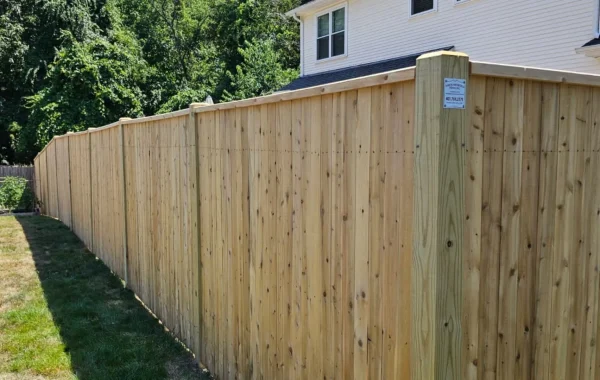


Staining is generally the better option for wood fences. It works with the natural properties of wood instead of against them, offering more consistent performance, easier maintenance, and a finish that ages more predictably. While paint can provide a solid, uniform look, it often leads to peeling and higher long-term maintenance on wood surfaces.
If you are comparing painting vs. staining a wood fence, both options can protect and improve appearance, but they perform differently. The right choice depends on the type of wood, the condition of your fence, and how much upkeep you want to handle.
Painting vs Staining a Fence: Main Differences
Paint forms a coating on top of the wood. It blocks moisture and creates a uniform finish, but it can peel over time. Stain absorbs into the wood fibers, allowing the grain to show while offering protection that wears more gradually.
For wood fences, this difference matters because wood expands and contracts with weather. A finish that works with that movement will generally last longer with fewer visible issues.
Paint vs Stain for Wood Fences
| Factor | Paint | Stain |
| Appearance | Solid, uniform color | Natural look, shows wood grain |
| Penetration | Sits on surface | Penetrates wood fibers |
| Durability | Longer per application | Shorter lifespan per coat |
| Maintenance | More intensive when repainting | Easier reapplication |
| Peeling | Can peel or crack | Does not peel, fades instead |
| Preparation | Requires cleaning, sanding, priming | Requires cleaning, minimal prep |
| Moisture Protection | Strong surface barrier | Moderate protection |
| Cost (Short Term) | Higher | Lower |
| Cost (Long Term) | Can balance out over time | Can add up with frequent reapplication |
Painting a Wood Fence: Pros and Cons
Pros:
Painting is a strong option when you want maximum coverage and a defined look.
1. Uniform finish
Paint hides imperfections, making it ideal for older fences with discoloration or mixed wood tones.
2. Longer intervals between applications
With proper prep, paint can last several years before needing attention.
3. Better moisture resistance
The sealed surface helps protect against water intrusion, which can reduce rot in some conditions.
Cons:
1. Risk of peeling and cracking
As wood expands and contracts, paint can break down, especially in areas with temperature swings.
2. More labor intensive upkeep
When paint fails, it often requires scraping and full repainting rather than simple touch ups.
3. Less forgiving on aged wood
Older wood may not hold paint as well, leading to inconsistent results.
Pros and Cons of Staining a Wood Fence
Pros
Staining is often preferred for newer wood fences and homeowners who want a natural look.
1. Enhances the wood’s character
Stain highlights grain patterns and texture instead of covering them.
2. Easier maintenance cycle
Reapplying stain typically does not require stripping, making ongoing care simpler.
3. Better performance with wood movement
Because it penetrates the wood, stain is less likely to crack or peel.
Cons
1. More frequent reapplication
Most stains need to be reapplied every two to three years.
2. Less uniform color
Results vary based on wood type and age.
3. Lower surface protection
Stain does not create as strong of a barrier as paint.
Staining Considerations for Cedar vs. Other Wood Types
Not all wood fences respond the same way to stain. Cedar, one of the most popular fencing materials, behaves differently from pressure-treated pine or other woods.
| Factor | Cedar | Pressure Treated Pine | Other Common Woods |
| Natural Resistance | High resistance to rot and insects | Moderate, relies on treatment | Varies by species |
| Stain Absorption | Even and consistent | Can be uneven if not aged properly | Varies widely |
| Appearance with Stain | Rich, natural tones | More muted, can look blotchy | Depends on grain pattern |
| Prep Requirements | Light cleaning, ready sooner | Needs drying time after installation | Depends on moisture content |
| Maintenance Frequency | Every 2 to 3 years | Every 2 to 4 years | Varies |
| Longevity with Stain | Strong performance | Good if maintained properly | Depends on quality |
Cedar is often the best choice for staining because of its natural durability and consistent finish. Pressure-treated wood can also be stained effectively, but timing and preparation are more critical.
Cost and Maintenance for Wood Fences
When comparing painting vs staining a fence, cost should be evaluated over time.
- Painting has higher upfront costs due to preparation and materials
- Staining costs less initially but requires more frequent upkeep
- Labor plays a significant role in both options, especially for large fences
Maintenance also varies:
- Painted fences require more effort when refinishing
- Stained fences require more frequent but simpler maintenance cycles
How to Choose Based on Your Fence
Choose paint if:
- Your fence is older or has visible imperfections
- You want a bold, consistent color
- You prefer fewer applications over time
Choose stain if:
- Your fence is newer and made from cedar
- You want a natural wood look
- You prefer easier, seasonal fence maintenance
When Maintenance or Repairs Are Not Enough
If your wood fence is warped, rotting, or structurally compromised, painting or staining will not solve the problem. At that point, its fair to weight fence repair vs. replacement options to see what makes the most sense for yours.
A new wood fence or alternative material can provide better durability and reduce long-term maintenance demands.
If you are evaluating painting vs. staining a fence, explore our fence repair services and will help you evaluate the best option for your type of fence.