

Vinyl fencing has become one of the most popular choices for homeowners and commercial property owners who want a clean, durable fence without the regular maintenance that comes with wood. It works well for privacy, pools, yards, property lines, and other commercial and residential applications.
That does not mean every vinyl fence is the same. The right style depends on how much privacy you want, how the property is used, what kind of look fits the space, and whether you are replacing an older fence or installing something new.
If you are comparing fence materials, vinyl is worth a closer look. It offers a polished appearance, holds up well in Rhode Island weather, and gives you several style options without requiring painting or staining.
What are vinyl fences made of?
Vinyl fences are made from PVC, a strong plastic material designed for outdoor use. Unlike wood, vinyl does not rot, splinter, warp, or attract insects. It is also not painted on the surface, so the color runs through the material. That helps it keep a consistent appearance over time.
Most vinyl fencing comes in panel systems with posts, rails, and pickets or solid sections. Depending on the style, it can be used for full privacy, decorative front yards, pool enclosures, property boundaries, or commercial spaces that need a neat and low-maintenance perimeter.
For many property owners, the biggest appeal is simple: vinyl gives you a finished look without the ongoing upkeep of scraping, painting, staining, or sealing.
Top vinyl fence styles
One of the strengths of vinyl fencing is that it is available in several styles. Some are built for privacy. Others are more open and decorative. Choosing the right one comes down to how you want the fence to function.
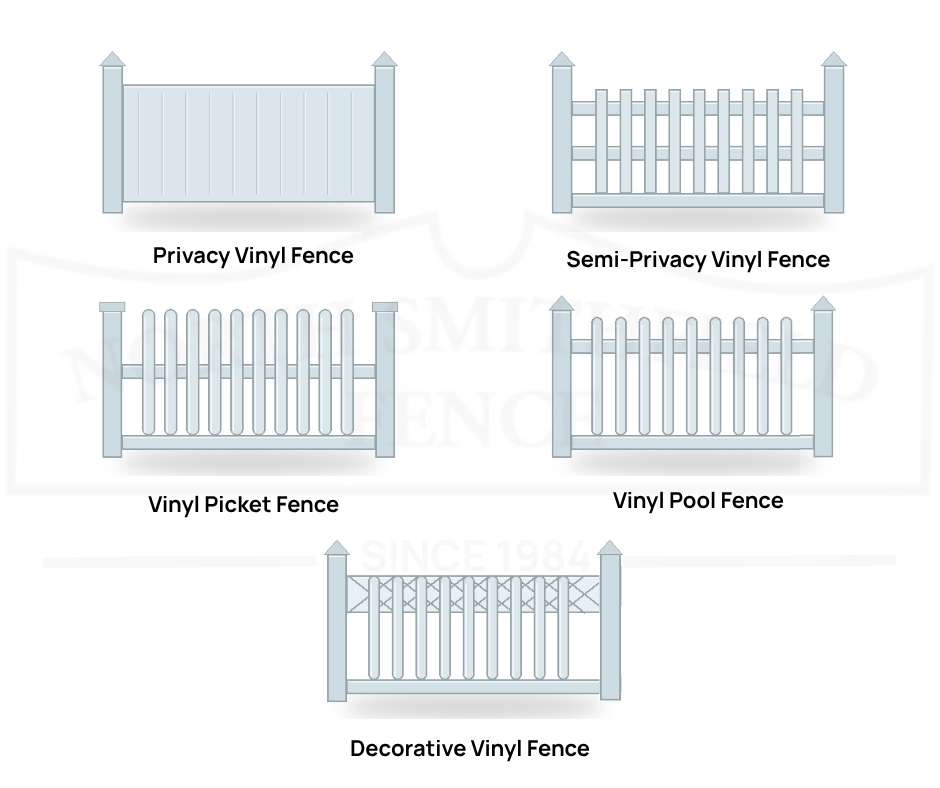
1. Privacy vinyl fencing
Privacy vinyl fences use solid panels with little to no spacing between boards. These are a strong option for backyards, patios, pools, side yards, dumpsters, storage areas, and commercial spaces where screening matters.
A full privacy vinyl fence can help block views from nearby homes, roads, parking areas, or neighboring properties. It is often used when the main goal is creating a more comfortable and enclosed outdoor space.
For residential properties, privacy vinyl fencing is common around backyards, especially when homeowners want a clean look without maintaining a wood privacy fence. For commercial properties, it can help screen equipment, service areas, outdoor storage, or customer-facing spaces that need a tidier appearance.
2. Semi-private vinyl fencing
Semi-private vinyl fences offer some screening while still allowing light and air to pass through. These styles usually have narrow gaps between pickets or boards.
This can be a good middle ground if you want separation without making the space feel fully closed off. Semi-private fencing works well for shared property lines, side yards, gardens, patios, and areas where airflow matters.
It can also be useful for commercial properties that need a defined boundary but do not need complete visual blocking.
3. Vinyl picket fencing
Vinyl picket fences are a classic choice for front yards, walkways, gardens, and decorative boundaries. They create a welcoming look while still marking the edge of a property.
Picket styles can be spaced or closed, depending on how much visibility you want. Spaced picket fences feel more open and traditional, while closed picket styles offer a little more separation.
For homes, vinyl picket fencing works well when curb appeal is the priority. For businesses, it can create a neat, approachable border around offices, storefronts, outdoor seating areas, or landscaped spaces.
4. Pool vinyl fencing
Vinyl fencing is often used around pools because it does not rust and can handle moisture well. Many pool fence styles are designed to meet height and spacing requirements, but local codes still matter. A professional installer can help make sure the fence layout and gate setup are appropriate for the property.
Privacy vinyl fencing is common around pools when homeowners want a more enclosed space. Picket or semi-private vinyl styles can also work when the goal is safety and visibility.
5. Decorative vinyl fencing
Some vinyl fences include lattice tops, accent rails, scalloped pickets, or other design details. These options can soften the look of a privacy fence or add character to a front yard or commercial property.
Decorative vinyl is often a good fit when the fence needs to serve a practical purpose but still look finished from the street.
Pros and cons of vinyl fences
Vinyl fencing is a strong option for many residential and commercial properties, especially when low maintenance and a clean appearance are priorities. Like any fence material, it has advantages and tradeoffs, so it helps to look at both before deciding if it fits your property.
| Pros | Cons |
|---|---|
| Low maintenance: Vinyl does not need painting, staining, or sealing. Most cleaning can be done with water and mild soap. | Higher upfront cost than some wood options: Vinyl can cost more at installation, though it may save time and maintenance over the years. |
| Clean, consistent appearance: Vinyl keeps a neat, uniform look, which works well for homes, HOAs, rental properties, and commercial spaces. | Less natural look than wood: Vinyl has a polished finish, but it does not have the same texture or character as real wood. |
| Resistant to rot and insects: Vinyl does not rot, splinter, or attract pests the way wood can. | Repairs usually involve replacing parts: If a panel or section is damaged, it may need to be replaced rather than patched. |
| Good for privacy and replacement projects: Solid vinyl panels can create strong screening for backyards, pools, service areas, and older fence replacements. | Limited color changes: Since vinyl is not meant to be painted like wood, you should choose a color and style you are comfortable with long term. |
| Handles moisture well: Vinyl performs well in rain, snow, humidity, and areas where wood may wear down faster. | Quality matters: Lower-quality vinyl can become brittle or discolored over time, so product choice and installation matter. |
Best uses for vinyl fencing
Vinyl fencing is a strong fit for many residential and commercial situations, but it is especially useful when appearance and maintenance both matter.
For homeowners, vinyl works well for backyards, pool areas, front yards, pet areas, garden borders, and privacy around patios or decks. It can help make outdoor spaces feel more usable without creating a constant maintenance project.
For commercial properties, vinyl can be used around offices, multifamily properties, schools, daycares, retail spaces, service areas, outdoor seating areas, and light commercial boundaries. It offers a professional look and can reduce the need for frequent upkeep.
Vinyl is also worth considering for fence replacement projects. If your current fence is faded, unstable, damaged, or no longer giving you the privacy you need, vinyl may be a practical upgrade.
Why are vinyl fences so popular?
Vinyl fencing is a good choice if you want a fence that looks clean, lasts well, and does not require much upkeep. It is especially practical for property owners who want privacy, or a defined boundary without the maintenance that comes with wood.
The best style depends on your property. A backyard may need full privacy, a front yard may look better with pickets and a business may need screening around a service area.
That is why it helps to compare options before choosing a style. The right vinyl fence should fit the property, the purpose, and the way the space is actually used.
Explore vinyl fence options
Whether you are looking for privacy, a cleaner property line, a pool fence, or a low-maintenance replacement for an older fence, there are several vinyl styles worth considering. Explore our vinyl fence options to compare them along with layouts, and uses that may be a good fit for your property.