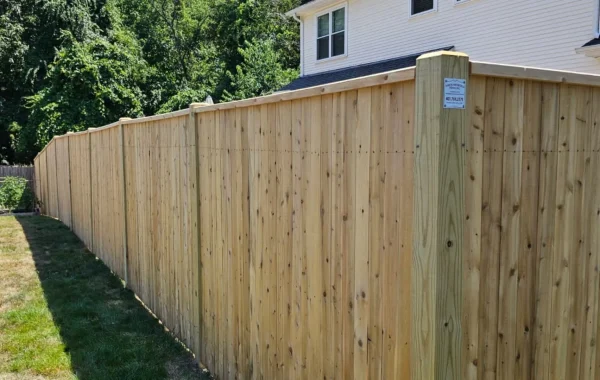
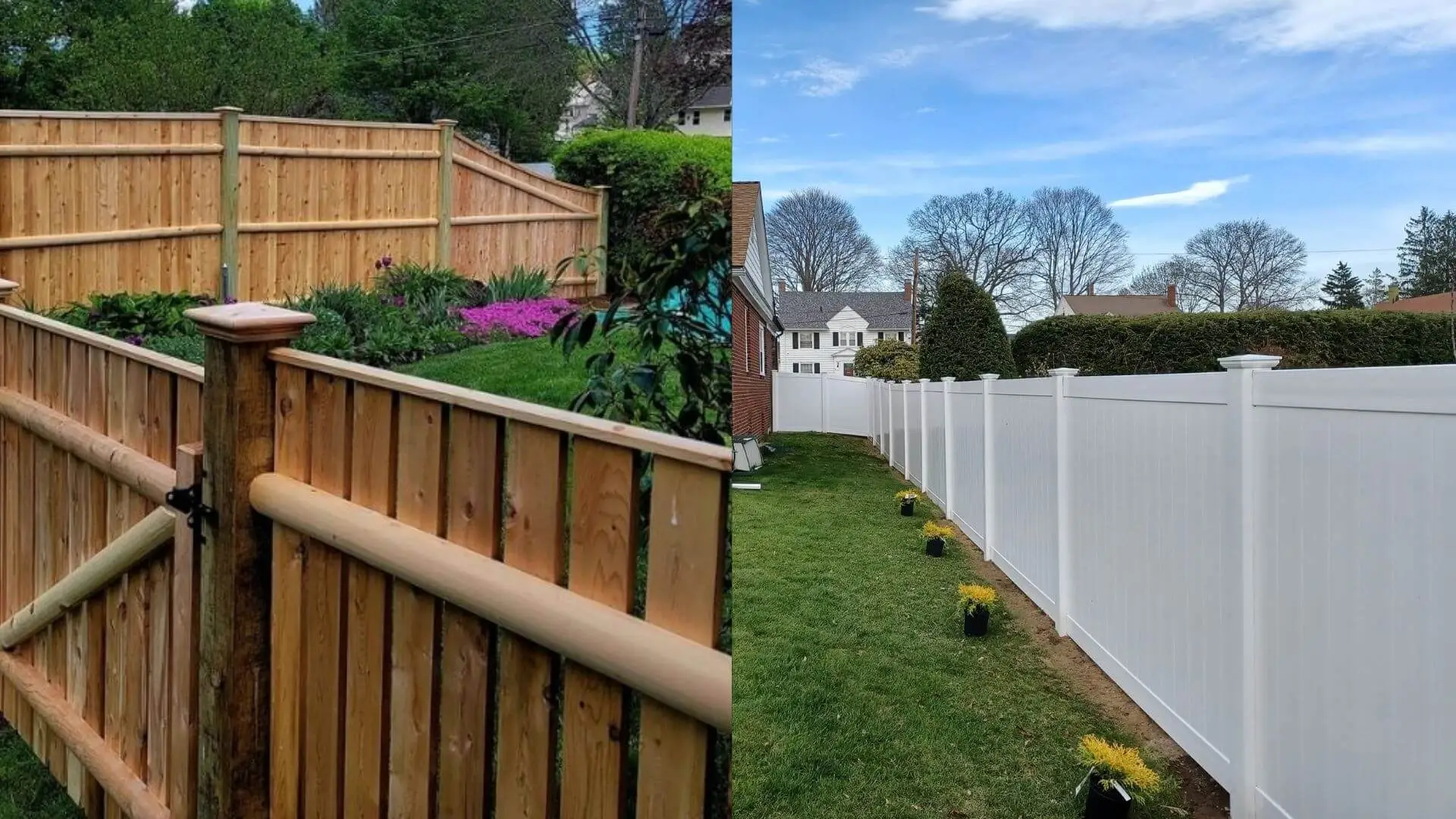

While both are excellent choices, each has its strengths and weaknesses, depending on your priorities and the weather’s demands.
When it comes to choosing the right fence for your home, climate is a crucial factor, especially in a region like New England, where harsh winters, humid summers, and sudden weather shifts are the norm. Among the top contenders for fencing materials are cedar and vinyl.
This guide will help you determine which option, vinyl or cedar, is best for your property, style, and maintenance expectations in New England.
New England Climate and Its Effects on Fencing
New England experiences:
- Heavy snowfall
- Frequent freeze-thaw cycles
- High humidity in summer
- Strong UV exposure
- Occasional Nor’easters and hurricanes
Your fence must be more than just decorative; it needs to be durable, low-maintenance, and able to withstand the elements year-round.
Cedar Fence Overview
Pros of Cedar Fencing in Cold Climates
- Natural Weather Resistance: Cedar contains natural oils that make it resistant to insects and decay, an ideal feature for moisture-heavy regions.
- Rustic Aesthetic: The warm tones and grain of cedar offer timeless curb appeal.
- Insulating Properties: Cedar is a softwood that naturally insulates, helping stabilize temperature fluctuations within the material.
Cons of Cedar Fencing
- Maintenance Required: To keep it from graying and warping, cedar needs to be stained or sealed every 2–3 years.
- Susceptibility to Rot: Without proper care, moisture from snow and rain can cause cedar to rot over time.
- More Frequent Repairs: Wood may crack, split, or warp with repeated freezing and thawing.
Best Scenarios to Choose Cedar in New England
- If you’re going for a traditional, natural aesthetic.
- If you’re willing to invest time in maintenance.
- If sustainability and natural materials are important to you.

Vinyl Fence Overview
Pros of Vinyl Fencing in New England
- Low Maintenance: Vinyl won’t rot, fade, or require sealing. Just rinse with a hose!
- Weather Durable: Resistant to snow, rain, and even UV rays.
- Insect-Proof: Unlike wood, vinyl isn’t vulnerable to termites or ants.
- Modern Styles Available: Available in many colors and designs that mimic wood.
Cons of Vinyl Fencing
- Cold Cracking: In sub-zero temperatures, vinyl can become brittle and crack under impact.
- Higher Upfront Cost: Typically costs more than cedar at purchase and installation.
- Limited Repairs: Damaged panels often need full replacement.
Best Scenarios to Choose Vinyl in New England
- If you prioritize low maintenance and longevity.
- If you want a clean, modern look.
- If you’re dealing with high moisture or snow loads.

Comparison Table
| Feature | Cedar Fence | Vinyl Fence |
| Appearance | Natural, rustic wood look | Clean, modern; wood-like options |
| Durability in New England | Moderate with proper care | High, very weather-resistant |
| Maintenance Requirements | High, needs sealing or staining | Very low – occasional rinse |
| Resistance to Moisture | Moderate – susceptible to rot | Excellent – no rot or water damage |
| Cold Weather Performance | Can crack/warp if untreated | Can become brittle in extreme cold |
| Lifespan | 15–20 years with care | 20–30 years |
| Environmental Impact | Renewable material, biodegradable | Recyclable but synthetic |
| Cost | Lower upfront, higher long-term care | Higher upfront, minimal upkeep |
Long-Term Maintenance Considerations
Season by Season Tips
- Winter: Keep snow from piling against your fence, especially with vinyl.
- Spring: Inspect cedar for rot, re-stain as needed.
- Summer: UV rays can fade cedar; use a UV-protective sealant.
- Fall: Clear debris and leaves to prevent moisture buildup.
Installation & Cost Considerations
- Cedar is easier for DIY installation due to lighter panels and flexibility.
- Vinyl often requires professional installation, particularly in uneven or rocky terrain.
- Cedar costs less per linear foot but requires more maintenance over its lifetime.
- Vinyl may cost more upfront, but savings add up in maintenance-free years.
Which Fence Should You Choose in New England?
Both vinyl and cedar fencing have their place in a New England yard.
- Choose cedar if you value natural materials, traditional charm, and don’t mind seasonal upkeep.
- Choose vinyl if you want a long-lasting, maintenance-free solution that withstands snow, moisture, and temperature shifts.
Ultimately, the right choice depends on your budget, time, and aesthetic preference. Either way, you’ll be investing in privacy, safety, and curb appeal for years to come.
Thinking about updating your backyard? Check out North Smithfield Fence fencing options built in-house, and perfect for Rhode Island homes. Explore our types of fences.