
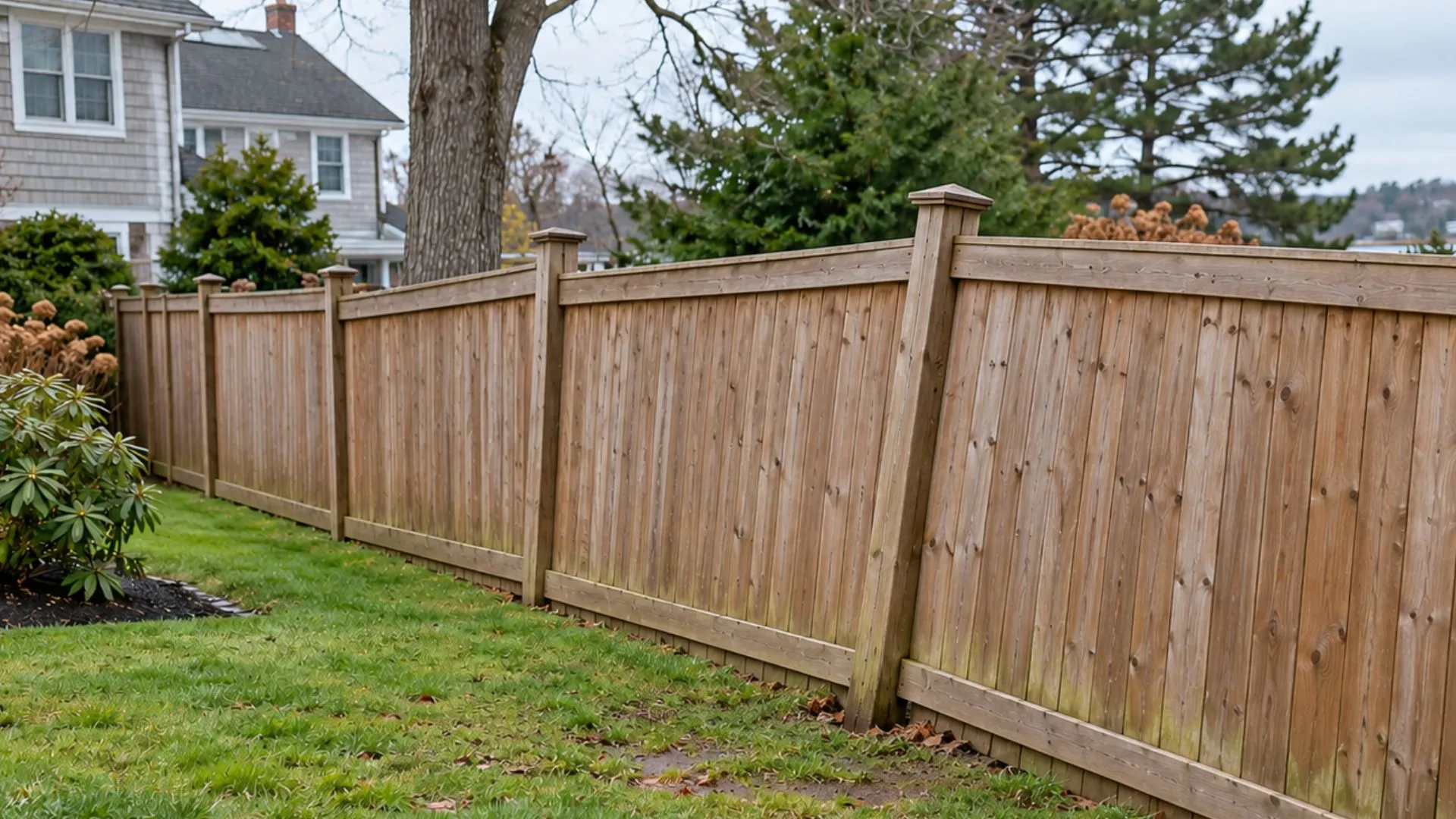

A leaning fence is one of those things you notice slowly. At first, one section looks a little off, then a post starts shifting or the gate does not close the way it used to. Before long, the fence that used to feel sturdy is tilting enough that you can see it from the driveway, the backyard, or the street.
If you are wondering, “Why is my fence leaning?” the short answer is usually one of a few things:
- the posts are failing,
- the ground has shifted,
- the fence is carrying too much weight,
- or the materials are reaching the end of their useful life.
The right next step depends on what is causing the lean and how far the damage has spread.
Cause #1: The fence posts are loose, rotted, or damaged
Most leaning fence problems start with the posts since these do the heavy lifting. They hold the panels upright, support the gate, and keep the entire fence line stable. If one or more posts become loose, damaged, or weak, the fence can start to lean even if the panels themselves still look decent.
Wood posts can rot over time, especially near the ground where moisture collects. Even pressure-treated wood can eventually break down after years of exposure to rain, snow, soil, and freeze-thaw cycles.
You may notice:
- The post moves when pushed
- The fence panel pulls away from the post
- The wood feels soft near the base
- The post is cracked, split, or visibly rotted
- The fence leans more after storms or heavy wind
If only one post is affected, a repair may be possible. If several posts are failing, it may be a sign that the fence is aging out and replacement should be considered.
Cause #2: The posts were not installed deep enough
A fence can also lean because the posts were not set properly in the first place, which is especially common when posts are too shallow, not secured correctly, or installed without enough attention to soil conditions. A fence may look fine right after installation, but over time, wind, rain, and ground movement can expose the problem.
In New England, this matters. Fences in Rhode Island, nearby Massachusetts, and Connecticut deal with changing seasons, wet soil, frost, snow, and strong wind. Posts need to be installed with those conditions in mind.
If the posts do not have enough support below ground, the fence may start leaning section by section.
Cause #3: The ground has shifted around the fence
Soil can shift for several reasons, including drainage issues, erosion, nearby construction, tree roots, and repeated freeze-thaw cycles. If water is pooling around the posts or washing soil away from the base, the fence can lose support.
This is common in yards with:
- Poor drainage
- Sloped areas
- Heavy runoff from roofs or paved surfaces
- Soil that stays wet after rain
- Tree roots pushing near the fence line
If the ground around the fence is soft, uneven, or washed out, simply straightening the fence may not solve the issue. The underlying drainage or soil problem may need to be addressed so the fence does not start leaning again.
Cause #4: Wind and storm damage weakened the fence
A solid fence panel catches wind in a way that a more open fence does not. If the posts are already aging, shallow, or weakened, one good storm can push the fence out of alignment.
After heavy wind, you may notice one side of the fence leaning more than the rest. Gates may drag, hardware may loosen, and panels may pull away from posts.
Commercial properties can run into this too, especially with long fence lines around parking lots, storage areas, equipment yards, or dumpster enclosures. Once one section starts leaning, the stress can spread to nearby sections.
Cause #5: The gate is pulling the fence out of alignment
A sagging or misaligned gate can be caused by a leaning post, but it can also create additional strain on the fence. Gates are heavier than regular fence sections because they move, swing, and carry hardware. If the gate post is not strong enough or has started to shift, it can pull the surrounding fence out of line.
Signs include:
- The gate sticks or drags
- The latch no longer lines up
- The gate swings open or closed on its own
- The post next to the gate is leaning
- The surrounding panels look uneven
A gate issue may be repairable if the rest of the fence is in good shape. But if the gate post is rotted or the fence line has shifted, a more complete replacement may be the better long-term fix.
Cause #6: The fence materials are simply wearing out
Cedar can rot, split, warp, or weaken with age. Chain-link posts can loosen or bend. Vinyl can shift if the posts underneath are not stable. Aluminum fencing can lean if the posts move or the ground changes.
A leaning fence does not always mean the entire fence needs to come down. But if the fence is old, has multiple weak spots, or needs repeated repairs, replacement may be more practical than continuing to patch it.
This is especially true if the fence is no longer doing its job, whether that job is privacy, safety, security, pet containment, or property separation.
Should you repair or replace a leaning fence?
The best answer depends on the condition of the fence. A repair may make sense when the problem is limited to one or two posts, the panels are still in good condition, and the fence is otherwise solid.
Replacement may be the better option when several posts are leaning, the fence is older, the materials are damaged, or the same problems keep coming back.
For commercial properties, replacement may also make sense when the fence is part of site security, customer safety, equipment protection, or access control. A leaning fence can create liability concerns, especially near parking areas, walkways, gates, and public-facing spaces.
For homeowners, it often comes down to whether the fence still fits the property. If it is leaning, weathered, patched in several places, or no longer providing the privacy you want, a new fence may give you a cleaner and longer-lasting solution.
What should you do next?
If your fence is leaning, do not wait too long to have it looked at. A small lean can turn into a larger failure, especially after rain, snow, or high winds.
Walk the fence line and look for loose posts, soft wood, cracked panels, pooling water, and gate problems. If the fence moves when pushed, or if the lean is getting worse, it is time to get a professional opinion.
A good fence contractor can tell you whether a repair is realistic or whether replacement would be the better investment.
North Smithfield Fence installs and replaces fences for residential and commercial properties throughout Northern Rhode Island and nearby communities in Massachusetts and Connecticut. We can evaluate your leaning fence, identify what is causing the issue, and help you decide whether repair or replacement makes the most sense.
Thinking about fixing or replacing a leaning fence? Schedule an estimate with North Smithfield Fence and get a clear recommendation for your property.